
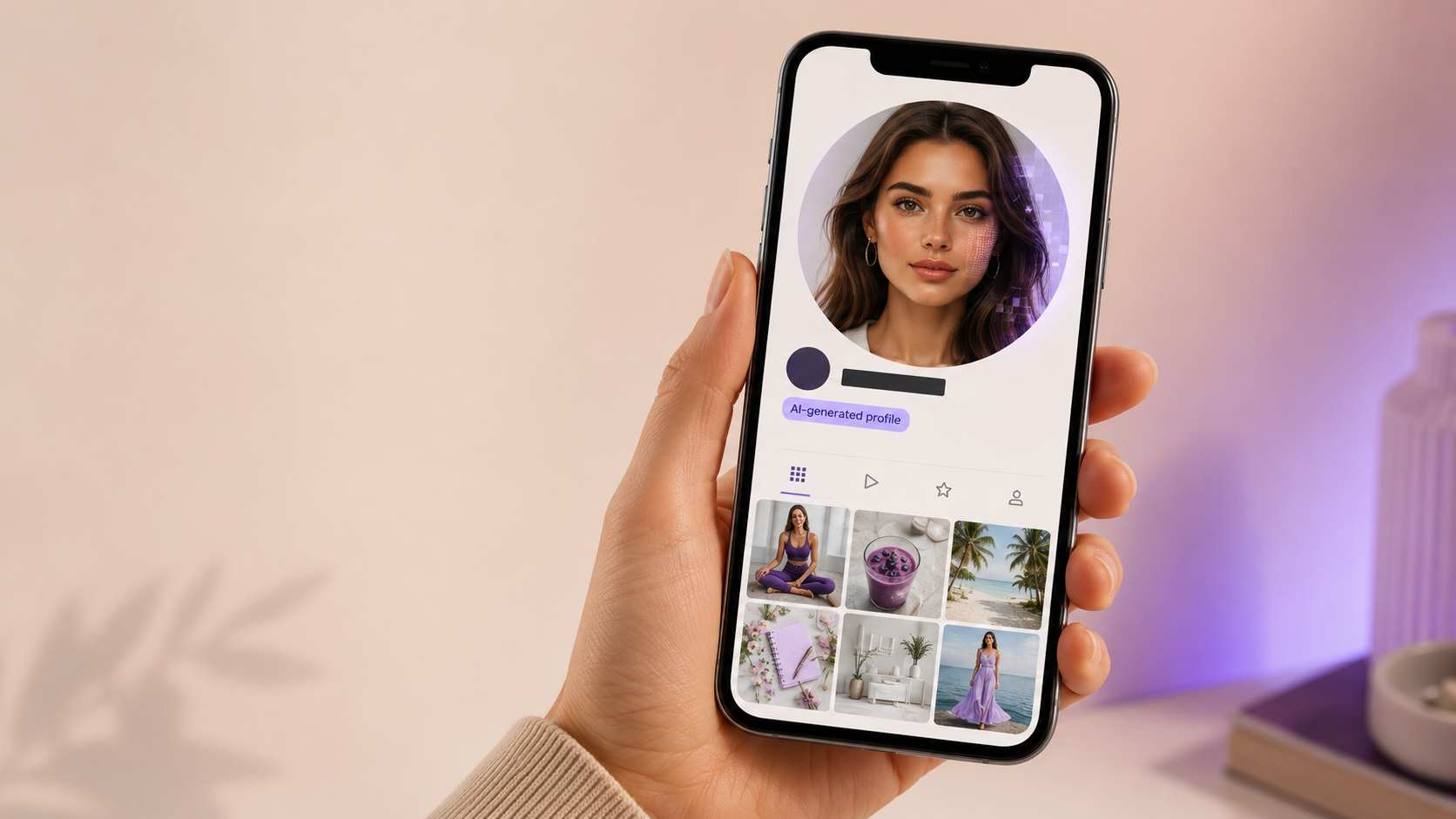
A brand can now create the perfect influencer. She never misses a deadline, goes off-message or asks for a higher fee. She can appear anywhere, wear anything and speak any language. Her appearance, personality and backstory can all be engineered to better appeal to the audience.
There is only one problem: She’s not real.
Brands won't be able to ignore that distinction much longer. On Aug. 31, Instagram announced it's replacing its "AI creator" label with a clearer "AI-generated profile" tag for accounts built around synthetic people. Profiles that should carry the label but skip it can lose access to recommendations, limiting their reach in Reels, Explore and other discovery surfaces. Instagram says its detection won't always get the call right, so it's building in an appeal process, but it can be expected that they’ll get better at identifying AI accounts.[1]
Instagram isn't outright banning AI influencers yet, and it isn't penalizing those who disclose that they are AI. The line it's drawing is narrower than that: use AI all you want, just don't let people mistake a machine for a person.
AI-Assisted Is Not the Same as AI-Generated
Instagram's policy draws a distinction that often gets lost in the larger argument over artificial intelligence.
A human creator who uses AI to brainstorm concepts, edit an image or improve production doesn't need to label the entire profile as AI-generated. The new label applies to accounts featuring a synthetic person presented as the personality behind the content. In other words, what matters isn't how the content was made; it's whether the audience understands who or what is speaking to them.
It's part of a broader shift across social media. In July, LinkedIn added a "Seems like AI slop" option that lets users flag posts that appear mass-produced or inauthentic, and retired its own "enhance your post" AI writing tool, replacing it with a feature that proofreads copy rather than rewriting it.[2]
The two policies address different aspects of the same issue. Platforms increasingly recognize that an endless supply of synthetic content can worsen the user experience. This isn’t simply an altruistic move to safeguard humanity; it’s a well-considered plan to mitigate users ditching platforms that are mostly artificial.
The Authenticity Gap
Brands routinely say they value authenticity, engagement and community trust. But brands say a lot of things. Their spending decisions still prioritize follower counts and views.
CreatorIQ's August 2026 State of Creators report surveyed more than 5,000 creators and found that income remains more closely associated with audience size than engagement. It also found that 42% of creators experience tension between the content their audiences want and the content brands ask them to produce; among creators with at least 500,000 Instagram followers, that figure rises to 53%. The report's starker finding may be the economic backdrop to all of it: 67% of creators earn less than $10,000 a year from content creation, and most still have a day job.[3]
The contradiction is obvious. Brands hire creators because they've built a distinctive voice and a trusted relationship with an audience. Then, they hand them rigid talking points, overproduce the content and sand away the qualities that made the creator valuable in the first place. Most creators aren’t in a financial position to say no, and even if they are, easy money ain’t easy to refuse.
This tension isn’t new. “The money” has been trying to mold “the talent” forever. What’s new is the scale of the playing field (social media) and the advent of players who are not, in fact, human.
The Human Premium
As AI makes high-quality content cheaper and more abundant, human personality is being edged out. Marketers have started calling that scarcity the human premium: the added value attached to communication that clearly reflects lived experience, individual taste and genuine judgment.
The human premium doesn't require content to look amateurish. It doesn't mean brands should avoid useful technology or pretend their teams aren't using AI. CreatorIQ found that 72% of creators have already used AI tools, most commonly for brainstorming, writing or editing.[3]
The important difference is assistance versus substitution. AI can help a creator organize an idea, polish a sentence, or even generate a photorealistic shot of someone using a product. What it can't do is supply the lived experience that made the idea worth sharing, judge whether that sentence sounds true to the person whose name is on it, or manufacture a real customer's relationship with the product.
Disclosure alone doesn't resolve this, either. Gucci and Valentino both ran fully disclosed AI-generated campaigns over the past year, and both got mocked in the comments as "cheap," "tacky," and "lazy" anyway.[5] Being upfront about the use of AI didn't buy back the goodwill. Audiences didn't feel tricked; they just preferred the human version.
What Brands Should Do Now
Know the difference between backstage and onstage uses of AI. Research, transcription, editing, translation and early concept development can improve efficiency without replacing the human source of the message. Presenting an invented person as a customer, expert or independent creator can erode trust.
Give real creators room to sound like themselves. Overly prescriptive briefs often produce the same sterile result as synthetic content: something that contains every approved message and none of the creator's actual personality. Provide objectives, guardrails and essential facts, then let the creator communicate in the voice their audience already trusts.
Evaluate creators on fit and credibility, not reach alone. A smaller creator with genuine authority in a particular community may deliver more value than a larger account whose feed has become an interchangeable procession of advertisements.
Embrace transparency. Roughly 190 organizations, including Meta, signed the EU's Code of Practice on Transparency of AI-Generated Content ahead of the Aug. 2 deadline built into the AI Act — a sign of where the regulatory floor is heading generally, even for brands outside the EU.[4] Waiting until disclosure becomes mandatory everywhere misses the larger point: Audiences don’t want to feel tricked.
The Bottom Line
Instagram's new policy doesn't represent a comprehensive rejection of AI. It represents a rejection of concealed artificial identity. AI will keep making content faster, cheaper and easier to scale. Persuasive communication remains stubbornly human.
The brands that understand this will use AI to support human creativity. The brands that don't may discover that the perfect synthetic spokesperson lacks the one quality that made an influencer influential in the first place: a real person behind the message.
Source Notes
[1] The Verge, "Instagram cracks down on AI accounts pretending to be human," Aug. 31, 2026.
[2] TechCrunch, "LinkedIn adds a button to report AI-generated 'slop,'" July 30, 2026.
[3] CreatorIQ, "The State of Creators 2026," Aug. 11, 2026.
[5] City A.M., "Gucci sparks backlash with AI-generated ads ahead of fashion week," Feb. 25, 2026.
